
~ You can listen using text-to-speech on your device ~
General George Armstrong Custer,
prodigy of the American Civil War, American hero, American soldier, American citizen,
is mocked, tarnished, insulted, forgotten by his nation.
His entire life has been whitewashed.
It is the result of one century of lies
by the very organisation he swore to serve until his death.
The US army has commited an act of high treason.
TREASON AGAINST CUSTER ANTI-AMERICAN
If someone asks why the USA do not stand up for General Custer
against the anti-American propaganda spread by today's American Indians,
it is because they do not want to stand up for him.
You can make movies insulting General Custer in every way possible.
You can defame him,
you can even try to desecrate the graves of soldiers
at the Little Bighorn battlefield.
Greetings Orwell Today Readers,
This article is the best defence of George Armstrong (Autie) Custer I've ever read, and am sharing today on the occasion of the 150th anniversary of CUSTER'S LAST STAND aka BATTLE OF LITTLE BIG HORN. It should be mandatory reading for all students of American history.
All the best,
Jackie Jura, June 25, 2026
The Choice of High Treason
A Chronology of How the US Army Decided to Betray General Custer
Instead of Bringing Major Reno and Captain Benteen to Justice,
and How This Decision Will Continue to Haunt the USA
by Custer West, October 2009
http://custer.over-blog.com/article-36114125.html
25 June 1876: MONTANA
Captain Frederick W Benteen and Major Marcus A Reno commit crimes of high treason by voluntarily letting General George A Custer and 210 men being slaughtered by American Indians. Benteen, Reno and their 400 soldiers survive with a majority of soldiers who have not shot a single bullet until the evening of June 25.
27 June 1876: MONTANA
General Terry discovers 2/3 of the 7th cavalry which survived the Little Bighorn. Strangely enough, 400 soldiers out of 647 survived the battle, while 210 soldiers, with the commander himself, died a few miles away. At a gallop, these 400 soldiers could have given support to their comrades in 15 minutes (studies by US General-in-chief Nelson A Miles, 1877).
July 1876: PHILADELPHIA
America learns of the defeat on the very day of her Centennial. For Generals Sherman and Sheridan, the reputation of the USA army is at stake. It is obvious that something is strange about the fact that the overwhelming majority of the soldiers actually survived the massacre, except the commander and his staff. The USA army convenes no court of inquiry. No court martial. Nothing.
September 1876: WASHINGTON D.C.
General Custer had testified against the well known corruption of the Grant administration. Now, Ulysses Grant has his revenge: in the newspapers, he presents Little Bighorn as Custer's "sacrifice of soldiers". This is the official call for the US army: no inquiry will ever take place. Captain Weir, the officer who tried to stop the betrayal, is brought to New York and put under pressure. Newspapers begin to speak about Major Reno's and Captain Benteen's strange (in)actions.
October 1876: WASHINGTON D.C.
Captain Frederic Whittaker speaks in the press about the betrayal. He tries to convince Captain Weir to testify againt Benteen and Reno but the Captain, depressed, is ruining his life with alcohol. He severely damages his health. Meanwhile, Major George Elliott, of the US army, sends a memo to modify the maps of the Little Bighorn. In a few months, many maps of the Little Bighorn are destroyed. The official fairy tale of a "undiscovered country" are given to the press. Moreover, an enormous Indian village, with thousands of fake warriors, is created on new maps.
December 1876: NEW YORK
Captain Thomas Weir dies from severe depression, alone. In 1879, the US army official newspaper would welcome an article, written by Captain Benteen, saying that Captain Weir was a drug addict.
Autumn 1878: WASHINGTON D.C.
Two years have passed, with no inquiry on the Little Bighorn. The public pressure on Major Reno has been huge. The Major decides to ask for an inquiry. He knows that the US army, who has decided since day one to cover his ass, will not let him down. The betrayal of the code of honor can now be complete, there is no turning back for the US army. By linking itself with those who had betrayed Custer, by faking evidence and refusing any legal protection to General Custer, the army covers itself with dishonor.
Autumn 1878: CHICAGO
The Reno Court of Inquiry starts near General Sheridan's office. The officer responsible for the hearings, Lt Jesse Lee, is under heavy pressure by the army. Once, Col Merritt directly threatens him of losing his job if he continues to ask interesting questions to witnesses. Only 23 selected witnesses (out of 380 + survivors) are asked to testify. The US army threatens them of losing their job and career if they do not protect Major Reno. The civilian scouts are the only people really critical of Reno's conduct. However, in their testimonies, many officers and soldiers give very damaging comments on Capt Benteen and Maj Reno. A "petition by the enlisted soldiers" to praise Benteen and Reno is presented by Reno's defense to the court. In 1951, the FBI, at the request of the Little Bighorn battlefield, would discover that this petition is full of fake signatures (Superintendant McChristian: "many signatures, if not the majority, are fake".) A map of the battle is presented by Major Reno as the copy of Lt Maguire's map. A study by Cartographic Inc (1995) would show that this map was a fake one, with huge differences with Maguire's map. The change had been made to exonerate Reno and Benteen. The Reno Court of Inquiry finally releases his report -- but no one can see it. In the final days of the hearings, chairman Jesse Lee officially says that Major Reno and Captain Benteen are guilty of perjuries when they said that they could not hear anything of Custer's fight. Nevertheless, the court concludes that Major Reno is innocent. The President of the United States and the US army accept the report. The report is locked up in the US army buildings. The US army and the US government officially "legalize" the defamation on General Custer. In 1884, General Merritt whitewashes Custer's participation in the Shenandoah Campaign (the Civil War) in a book.
1898: WASHINGTON D.C.
The controversy has lived on. Many critics of the Court of inquiry have continued to speak out for truth, including the US General-in-chief Nelson A Miles, who gets the confession of chairman Jesse Lee. Miles condemns Reno and Benteen for treason and is ashamed that the US army hasn't done any official and extensive inquiry on the battle.
1931: WASHINGTON D.C.
The US army puts the archives of the Reno Court of Inquiry on microfilm. 50% of the archives of this unofficial inquiry are destroyed, an illegal act.
1951: WASHINGTON D.C.
Under pressure by the officer of the Judge Advocate General (JAG) William Graham, the US army finally releases the microfilm to the public. Graham discovers that many reports of hearings are missing. Some parts of the RCOI even contain useless pages of newspapers. The defamation on General Custer lives on. He is the only officer in US history whose entire career has been whitewashed in such ways that his successes (if known) are credited to "luck", and his failures are utterly exaggerated or invented for purpose. He is depicted as a fool, a womanizer, a drunk coward and an incompetent soldier.
1965: AMERICA
With the civil rights getting media exposure, the American Indians work hard to rewrite history, defame American pioneers and depict themselves as innocent victims of systematic killings. They are helped by the ignorance of new generations of Americans, by anti-American feelings among US citizens and by the fall of the American pride during the anti-Vietnam (and mostly anti-American) protests. Looking for a scapegoat to advance their agenda, the American Indians discover that General Custer can be defamed without any reaction by the US army or anyone else. In fact, they joyfully understand that everyone can invent whatever he wants on Custer and presents is as the truth. The fictionous story of "Custer the war criminal" is created. Of course, most of the US historians who should defend historical accuracy do not react. You can defame Custer. It is the new national sport. Turn off the TV and begin a book on Custer based on what you discussed yesterday with grandpa. No one will react to your fairy tale.
2009: AMERICA
General George Armstrong Custer, prodigy of the American Civil War, American hero, American soldier, American citizen, is mocked, tarnished, insulted, forgotten by his nation. His entire life has been whitewashed. It is the result of one century of lies by the very organisation he swore to serve until his death. General George Armstrong Custer served the US army and his flag, and the US army protected the officers who betrayed him. General Custer has never had any legal protection, any defenders in military circles, except individual officers or the US General-in-Chief Nelson A Miles. By covering up acts of high treason by Major Marcus Reno and Captain Frederick Benteen, the US army and the US government betrayed their soldiers, their values, their citizens, their history, their code of honor and their Constitution. The US army has commited an act of high treason that should be carved in the walls of the Department of Veteran Affairs. So if someone asks why the USA do not stand up for General Custer against the anti-American propaganda spread by today's American Indians, it is because they do not want to stand up for him. For American historians -- who have conveniently looked the other way, for the US army, for the US Department of Veteran Affairs, General Custer must never be a real historical subject. You can make movies insulting General Custer in every way possible. You can defame him, you can even try to desecrate the graves of soldiers at the Little Bighorn battlefield. You can rename the battlefield in order to honor those who killed 263 US soldiers and General Custer. You can do whatever you want, but you MUST NOT dig in the case. Don't you understand? Truth has never been important in this criminal case. Most historians have accepted the theory of the "convenient mystery". Every year, they come up with impossible theories, politically correct bullcrap and the ever-lasting fairy tales.
Watching most documentaries on Little Bighorn -- except the documentary made by the BBC, a British channel -- is like spending the day on Cartoon Networks: interviews of useless "witnesses" (some Indian found on the way to Little Bighorn who had enough time to speak before lunch), so-called experts who have never heard of the Reno Court of Inquiry, and the formidable Joe Medicine Crow, Medal of Freedom recipient, World War II hero, who creates a new story on what his grandfather "heard" for every new documentary (as for now, we have 35 different stories of how Custer discovered the fake big village). What a pathetic disgrace.
Little Bighorn is a 133-year old lie
"Reno was a yellow streaked coward... Benteen was a disloyal officer openly disobeying his commanding officer's orders, which he had in his pocket, and a traitor to his comrades and his country... With 380 men and the ammunition packs closed up, Benteen and Reno could and ought to have made that effort to save Custer's command. They they did not do so and it will always be recorded as a crime". Captain Robert Carter, Indian fighter of Mackenzie's command, friend of surviving officers of the 7th cavalry, Little Bighorn researcher and Medal of Honor Recipient. Captain Carter thought that justice would be done and the honor of his country preserved. He was wrong. This is the lesson: the honor of a United States officer, and the truth on which an entire nation is based on, means little.
~ end Chronology of how USA betrayed General Custer ~
Custer died 150 years ago at Little Big Horn
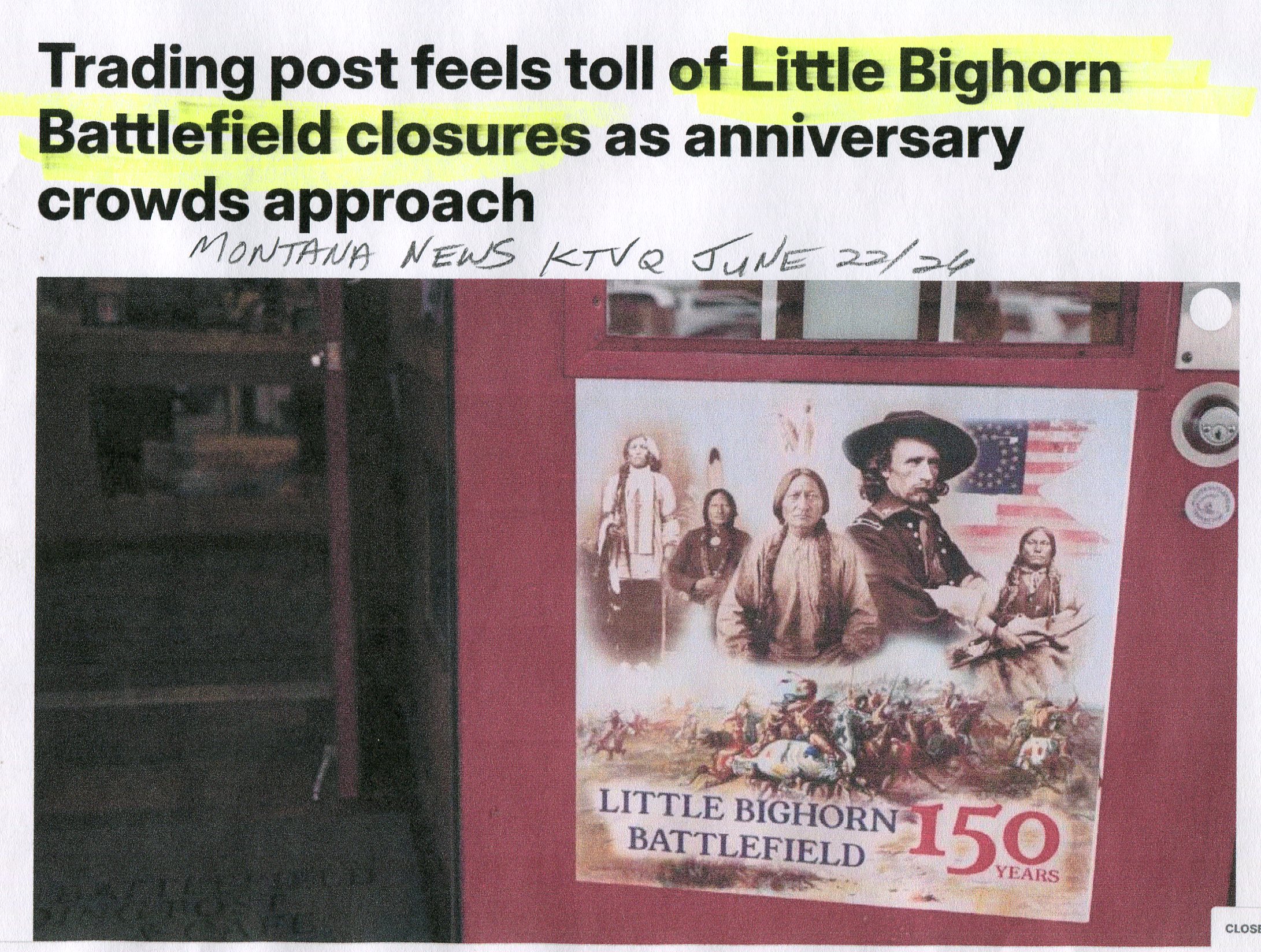
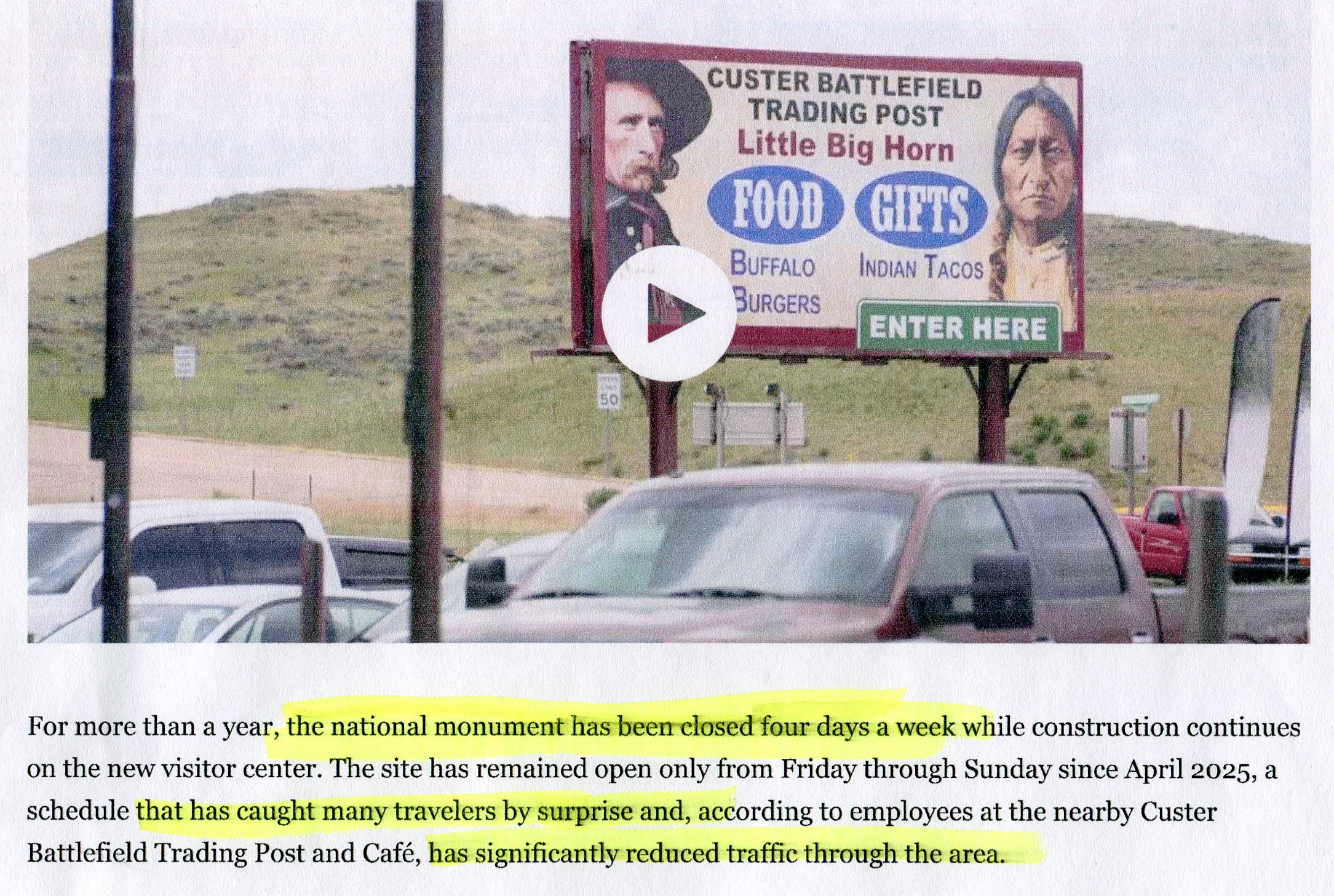
(battlefield closure kills dying tourism economy)


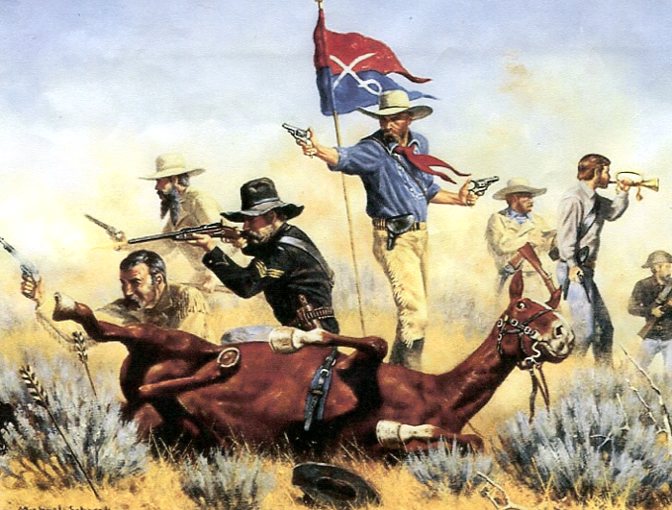
CUSTER MASSACRE AT GATES OF HELL
June 25, 1876-2026
HAPPY 123 BIRTHDAY OLD GEORGE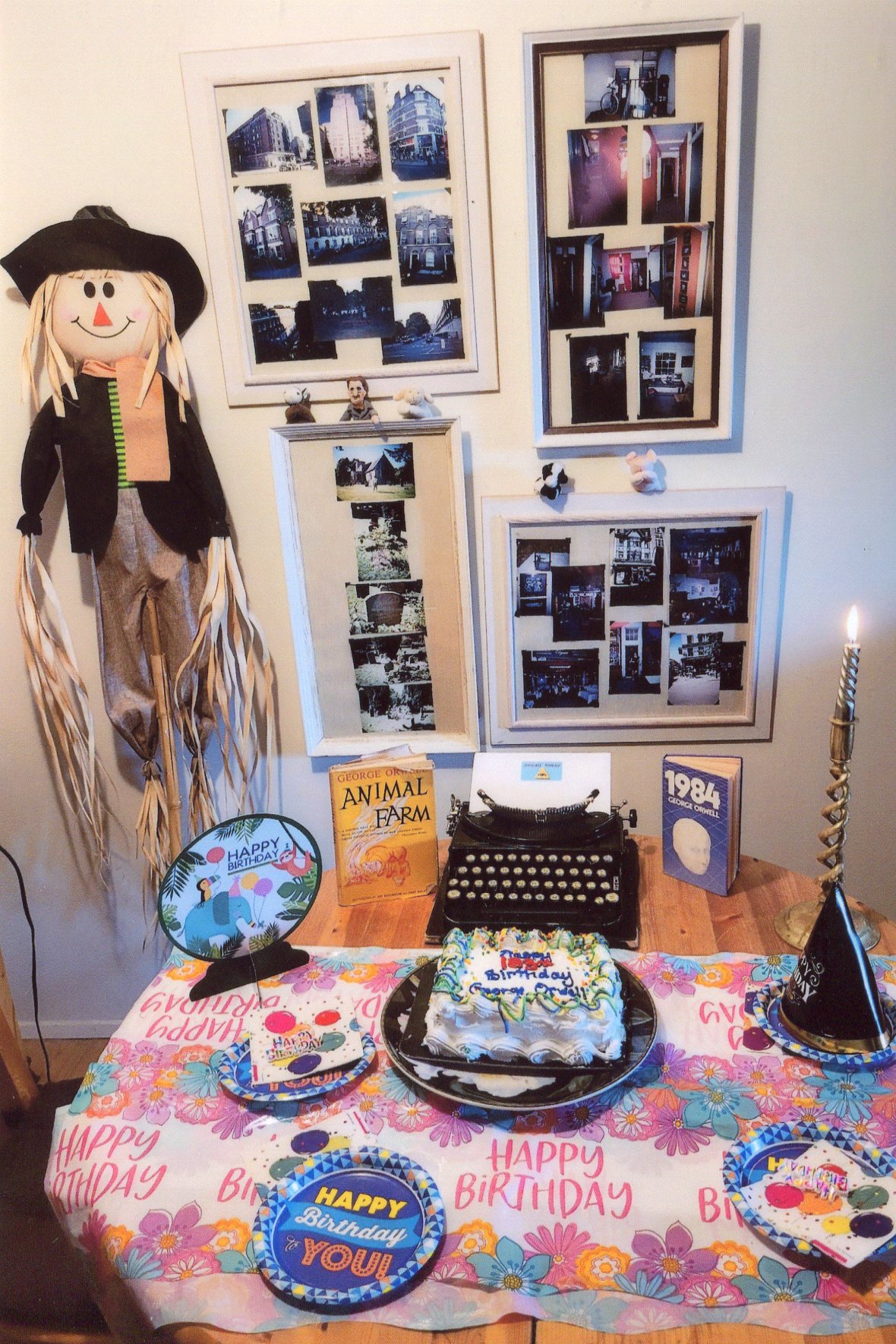
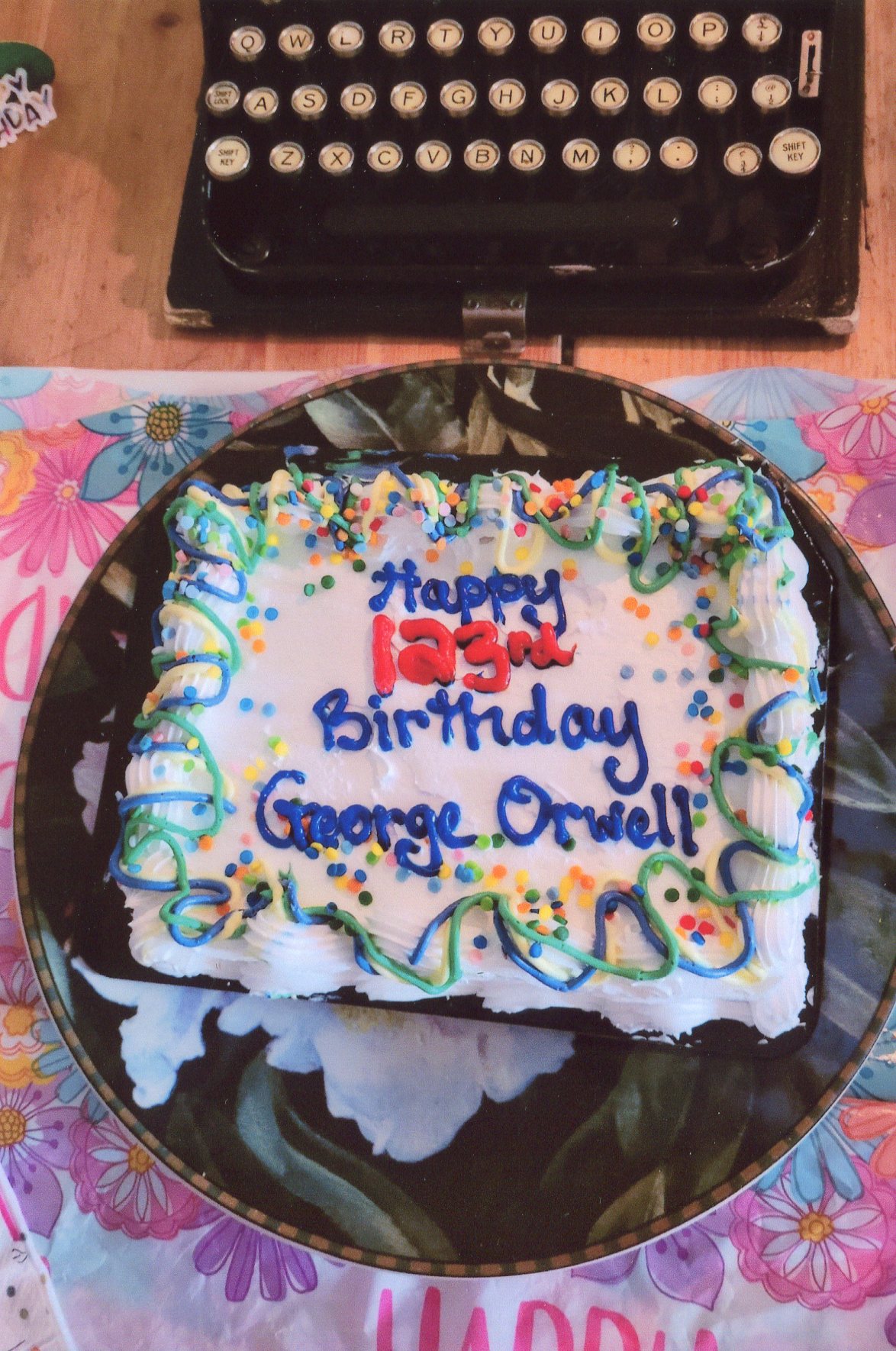

(raise toast of Jura whisky to honour great writer)
June 25, 1903-2026
PS - Like a birthday gift from Orwell, a few days before the 25th I was googling the web looking for news about both Georges, and godcidently came across an interview with the author of a new book about Custer and the Battle of Little Big Horn. I must admit my mind was almost dreading that it would probably be another rendition of Custer being blamed and the Indians made out to be victimized heroes. So WOW, what a pleasant surprise that it's a total defence of Custer -- a total understanding. I've already ordered the book -- in hardcover -- and can hardly wait for its arrival. What I'm most excited about is that it's full of newly created maps that will give a total bird's eye view of the battle. I'll share a review and pics when it arrives.
listen Custer's Last Stand Demystified With Bill Rini interview
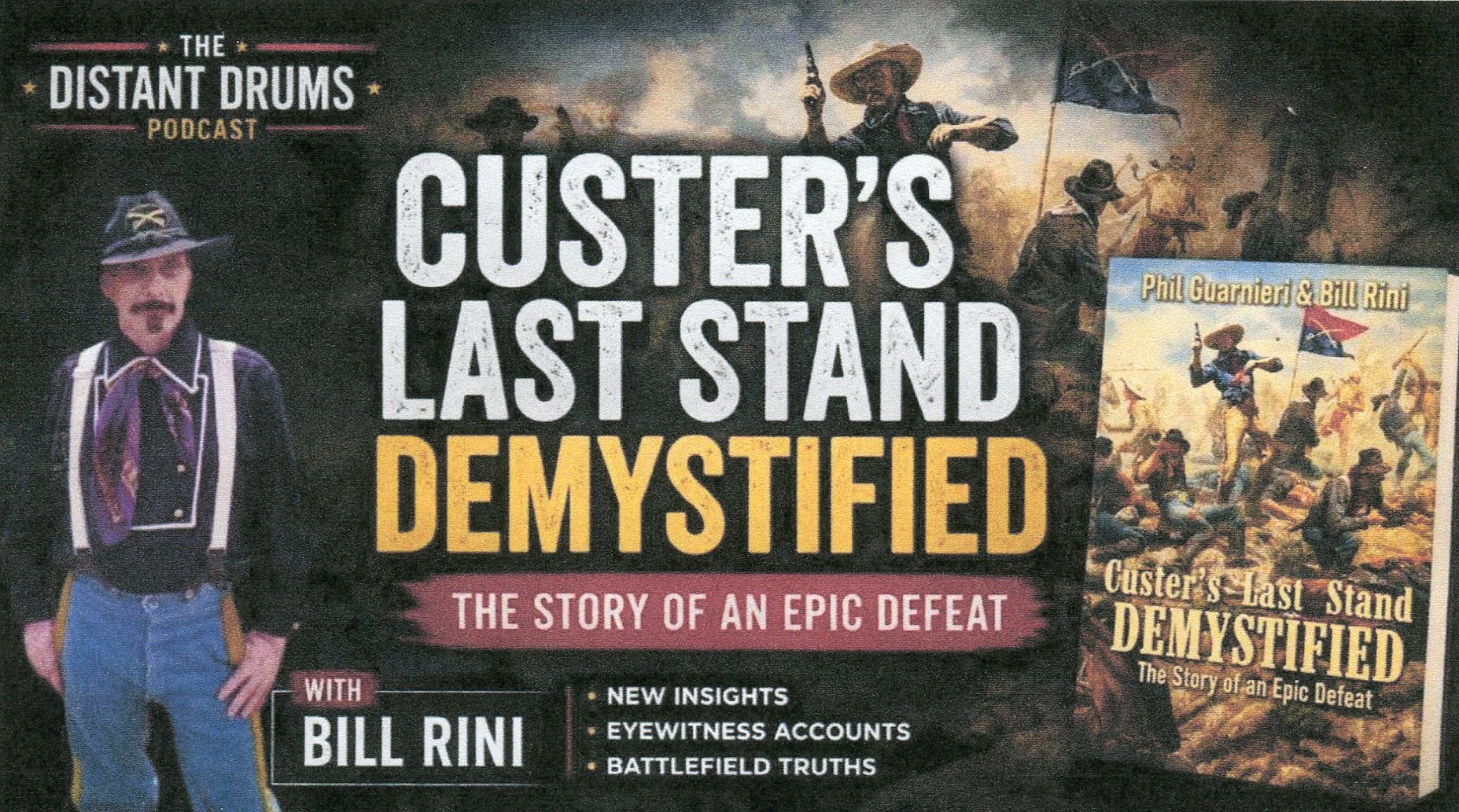
The Story of an Epic Defeat
by Bill Rini & Phil Guarnieri
The shattering news of the Battle of the Little Big Horn swept into the American consciousness with all the fury of a storm at sea surging ashore. For a still-young nation celebrating the centennial of its birth and anticipating the promise of a boundless future, the news of Custer's death ride hovered over the nation's celebrations like a nuclear winter. Ever since, gnawing questions surrounding this epic defeat have haunted the national imagination. How could the most famous regiment in the United States Army, led by a great war hero and its most renowned Indian fighter, succumb so disastrously and totally to the primitive savagery of the Western frontier? Since no trooper or scout who rode with Custer survived, answers to the debacle have never come easy, even for those determined to know the truth. From the first sighting of the massive Indian village, this new account provides a first-class, gut-wrenching historical reconstruction of events that is a model of prodigious research, as it builds, step-by-step, a case for what happened and why on that sweltering afternoon in June 1876. Drawing upon hundreds of personal accounts from both sides, furnishing exhaustive timelines and exquisitely detailed, uncluttered maps, the authors amplify old evidence while plowing untrodden ground in search of elusive clues. The result is a narrative bristling with the unholy cacophony of war, blending the art of superior storytelling with the historian's factual rigor. Unearthing fresh revelations of the great West's most storied and spellbinding encounter, this climactic slaughter along the banks of the Little Big Horn ultimately drove the Plains Indians and their way of life to an unmarked grave -- even as other forces forged together a Continental nation of mythical proportions.
PPS - In 2023 I wrote up my defense of Custer at the Battle of Little Big Horn arrived at through research and visiting the battlefield on the 140th anniversary in 2016.
 PILGRIMAGE TO CUSTER, by Jackie Jura
1.JOURNEY TO CUSTER'S LITTLE BIG HORN
2.CUSTER ALT-HISTORY BIG HORN VICTORY
3.LAST WORD ON CUSTER FROM FRONT
4.CUSTER MASSACRE AT GATES OF HELL
5.HOMAGE TO CUSTER AT LAST STAND
6.CUSTER ON BOZEMAN & DEADWOOD
7.CUSTER GOLD BLACK HILLS & RUSHMORE
8.STATUES OF PRESIDENTS & CUSTER
9.CUSTER'S GETTYSBURG ON THE PLAINS
10.CUSTER & SITTING BULL NOT EQUALS
11.CUSTER AT HOME AT FORT LINCOLN
12.CUSTER BIG HORN VICTORY ABORTED
13.BIG HORN CAVALRY DIDN'T COME
upcoming 14.TRACKING SITTING BULL IN CANADA
Jackie Jura
~ an independent researcher monitoring local, national and international events ~
email: orwelltoday@gmail.com
HOME PAGE
website: www.orwelltoday.com